The flagship program

Five days at Abbotsford Convent, Melbourne. Essential Skills in Psychedelic-assisted therapy.

A practice-based intensive for psychologists, therapists and other mental health professionals preparing to work with psilocybin and MDMA in clinical and research settings. Taught in person by faculty currently active in Australia's psychedelic clinical trials.

Hybrid format  ·  Online preparation modules + 5 days in-person + post-program Zoom session

APS CPD Approved 2026-27, 35 Hours
35 hrs APS-Approved CPD
5 days Abbotsford Convent, Melbourne
Feb 8–12 2027 intake
20 Maximum trainees
$4,295 AUD — early bird until 1 Dec (full $4,695)
Apply now → Applications open
Evidence-Based

Our curriculum draws directly from the published clinical trial protocols our faculty work within, including peer-reviewed psychedelic research our team has contributed to.

Clinician-Led

Taught by psychologists and researchers currently active in Australia's MDMA, psilocybin, and end-of-life psychedelic trials. The people teaching you are doing this work in clinical settings, week in and week out.

Ethics-First

Built around what the field has learned about how psychedelic-assisted therapy succeeds and where it can go wrong. Client preparation, environment, facilitator skill, and the therapist's own self-awareness are treated as the four conditions that make the work safe.

Trial-Experienced

PIA's faculty have spent years supervising therapy teams at Australian trial sites, including St Vincent's Melbourne, Edith Cowan University, Murdoch University, and QIMR Berghofer Medical Research Institute.

A different kind of psychedelic therapy training.

We built the Essential Skills Program because Australia needed training that is rigorous, and co-created by practising clinicians embedded in this field. Here's what makes it different from other options.

01

Practice over theory

The five days in Melbourne are built around supervised practice. You'll work through role-plays with faculty observing and giving feedback, watch live demonstrations, and take part in small-group exercises. By the end of the week you'll have actually done the work — not just read about it.

02

A small cohort, on purpose

We cap each intake at 20 trainees because the work asks for it. Smaller cohorts mean more individual attention from faculty, more time in supervised practice, and a peer group small enough that you know each other's names by day two. This is a relational skill, and relational skills are best learned in rooms where you can be seen.

03

Faculty who do the work

Our core faculty are currently active in Australia's psychedelic clinical trials. They're the clinicians who train other therapists for trial sites. When you join the Essential Skills Program, you learn from them in the same room, at the same standards they bring to their clinical work.

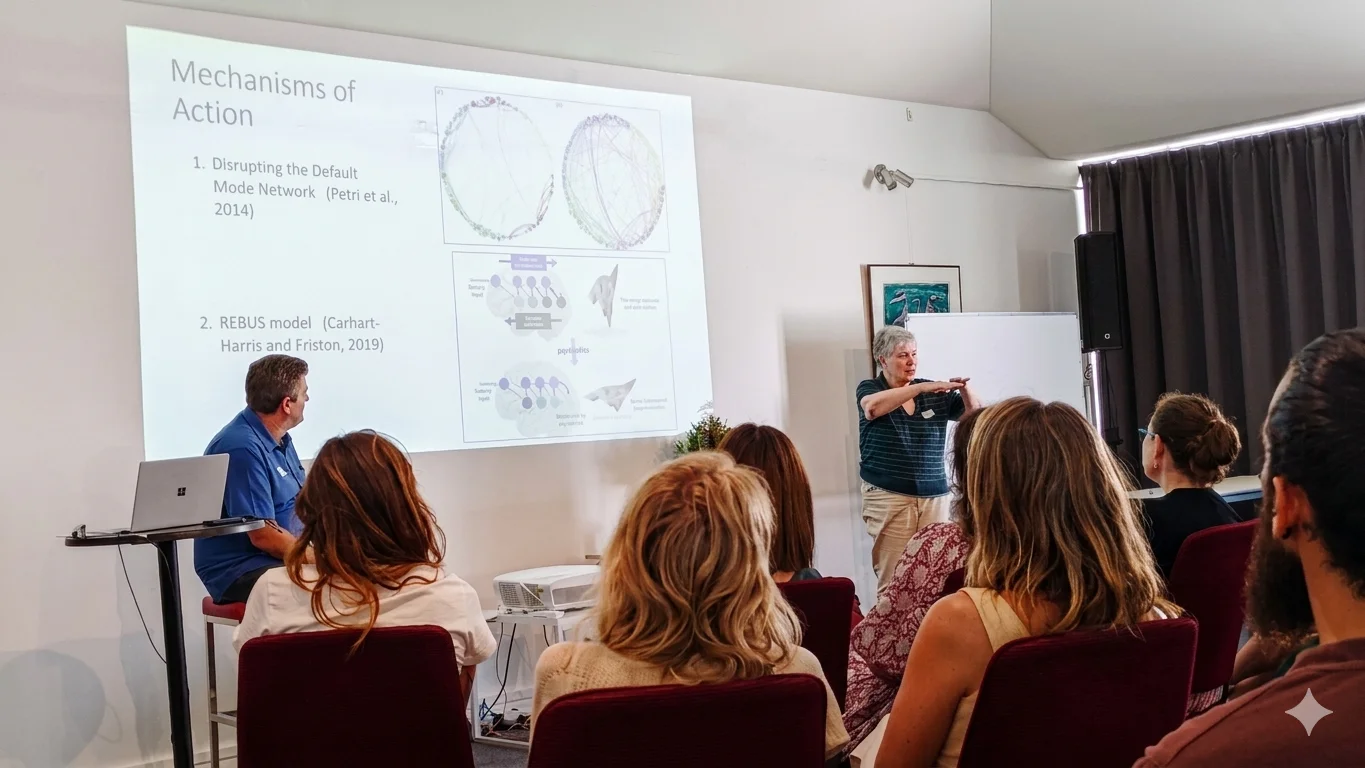
Dr. Stephen Bright & Renee Harvey leading a session at the PIA Essential Skills Program
Renee Harvey and Dr. Stephen Bright leading a session.

Why the Need for Psychedelic Therapy Training?

The Australian Therapeutic Goods Administration (TGA) rescheduled MDMA and psilocybin as Schedule 8 Controlled Medicines from the 1st of July 2023 following increasing emerging evidence that MDMA-assisted psychotherapy and psilocybin-assisted psychotherapy are effective at treating PTSD and Major Depressive Disorder. In doing so, Australia has become the first country in the world to recognise these drugs as medicines. To ensure the safe use of these treatments in the community, proper training is considered essential.

Research shows evidence for the effectiveness of MDMA and Psilocybin-assisted therapy

MDMA-Assisted Therapy

Evidence for PTSD Treatment

Two Phase 3 Randomised Controlled Trials showed that 67–71% of participants receiving MDMA-assisted therapy no longer met criteria for PTSD, compared to 32% of participants who received a placebo. These studies used the MAPS MDMA-assisted Psychotherapy Manual.

Psilocybin-Assisted Therapy

Evidence for Treatment-Resistant Depression

The COMPASS COMP360 Phase 2b trial (233 participants, 10 countries) found a single 25 mg psilocybin dose achieved a 29% remission rate and 54% response rate in patients who had failed 2–4 prior antidepressants. Two Phase 3 trials met primary endpoints in February 2026. Explore the full research summary →

Professional Development

35 APS-Approved CPD Hours

Earn 35 CPD hours towards your ongoing professional requirements, approved by the Australian Psychological Society—recognised professional development for maintaining registration.

APS CPD Approved 2026-27, 35 Hours

The Four S’s: a clinical framework for the full scope of psychedelic-assisted therapy.

Psychedelic-assisted therapy rests on four conditions. Each one is something the therapist actively learns, practises, and refines over time. Our entire curriculum is built around developing competence in all four, together rather than in isolation.

SET

Preparing the client

The client’s mental and emotional state going into the experience shapes everything that follows. This involves assessing psychological readiness, working with a client’s expectations and ambivalence, and developing the clinical judgement to know when a client is ready to proceed — and when they are not.

SETTING

The therapeutic environment

The context in which therapy occurs — including the relational environment — is an active therapeutic variable. This involves designing and managing a space that supports a non-ordinary state of consciousness — the physical environment, the music, the safety protocols, and the relational conditions that allow a client to engage with the work safely.

SKILLS

Clinical competencies

Competencies specific to psychedelic-assisted therapy — preparation, dosing-session presence, working with difficult experiences as they emerge, and integration — are practised through role-plays, supervised exercises, and live demonstrations. These are the techniques that cannot be acquired through reading alone.

SELF

The inner work

Countertransference is heightened in psychedelic-assisted therapy. Working therapeutically with your own responses and emotions in the presence of clients’ non-ordinary states requires ongoing self-examination of blind spots, edges, and the ways the therapist’s inner state becomes part of the treatment.

What You’ll Learn Each Day

Our in-person intensive follows a structured progression — from orientation and preparation through experiential learning to integration. Each day runs 9 am–5 pm with breaks throughout.

Day 1

Orientation & Foundations

  • Working with psychedelic medicines — an overview
  • Ethical practice in psychedelic-assisted therapy
  • Reflective practice and self-awareness
  • Understanding set, setting, and the therapeutic frame
Day 2

Preparation Session

  • Core therapist skills for psychedelic-assisted work
  • Setting up the therapeutic space
  • Conducting a preparation session
  • Pairs and group role-plays
Day 3

Experiential Day

  • Two guided breathwork sessions
  • Group debrief and shared reflection
  • Discussion, feedback, and peer learning
  • Post-session guidelines and documentation
Day 4

Dosing & Integration

  • Integration circle and reflective practice
  • Managing the dosing session
  • Addressing challenges and difficult experiences
  • Reflection and therapist self-care
Day 5

Integration & Beyond

  • Managing the integration session with clients
  • Future sessions and ongoing therapeutic support
  • Supervision and therapist development pathways
  • Next steps: clinical practice under supervision

Hybrid structure: Upon confirmed enrolment, participants gain access to 5 online eLearning modules via Psychedelics Today covering pharmacology, research evidence, clinical protocols, and ethical frameworks. These are completed before the in-person intensive. A Zoom integration session follows 2–4 weeks after the workshop.

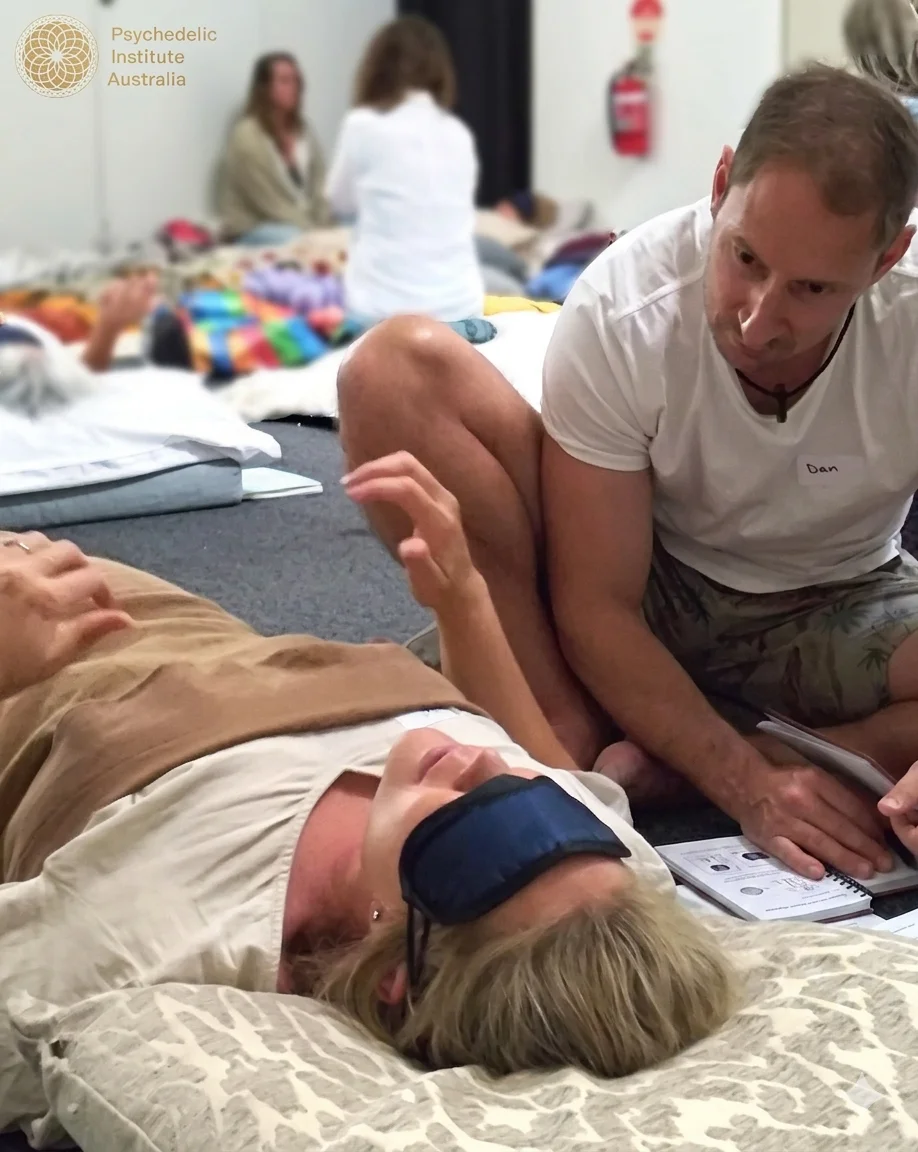
Participants during breathwork session at PIA training in February 2024, Byron Bay
Breathwork practice is part of the in-person intensive.

What You Will Learn

This program builds knowledge and practical skills across two integrated components: pre-course eLearning and the 5-day intensive.

Timeline: Access granted as soon as your enrolment is confirmed. Five quizzes assess competency (video viewing is optional). Completion is required for the certificate.

History & Substance Knowledge

  • Name the main categories of psychedelic substances
  • Identify key events and figures in psychedelic history (western context)
  • Summarise the main research findings of contemporary psychedelic science

Understanding Altered States

  • Describe Grof’s model of the psyche and apply it to understand a participant’s experience
  • Explain the key components and dimensions of altered states induced by psychedelics
  • Recognise psychological patterns and integration opportunities

Therapeutic Foundations

  • Describe the fundamental principles and methodologies of psychedelic therapy
  • Evaluate the potential benefits and risks associated with psychedelic-assisted treatment
  • Understand the evidence base for MDMA and psilocybin therapies

Timeline: 5 full days (9am–5pm). Plus a 2–4 week post-training Zoom integration session with the facilitation team.

Set — Preparing the client

Assessment & Client Selection

  • Understand inclusion/exclusion criteria for the treatment
  • Select, administer and evaluate appropriate baseline and outcome assessments
  • Make clinical decisions about client suitability and readiness

Preparation Sessions

  • Demonstrate understanding of how to conduct preparation sessions
  • Build client psychological readiness (“set”)
  • Manage communication and collaboration with wider treatment professionals
Setting — The therapeutic environment

Environment & Safety

  • Set up and manage the treatment environment (music, lighting, comfort, safety equipment)
  • Thoroughly understand safety concerns and implement safety protocols
  • Manage physical monitoring and respond to medical/psychological emergencies
Skills — Clinical competencies

Administration & Crisis Navigation

  • Manage the dosing session with confidence and attunement
  • Address likely challenges (clients becoming agitated, wanting to leave, difficult experiences)
  • Navigate complex emotional and psychological material with skill and boundaries

Integration & Ongoing Support

  • Conduct integration sessions that consolidate gains and apply insights to life
  • Help participants develop integration strategies for lasting benefit
  • Support future sessions and ongoing therapeutic work beyond the acute experience
Self — The inner work

Professional Development

  • Develop reflective practice skills for working with your own responses in sessions
  • Understand ethical principles in conducting this therapy
  • Identify supervision and ongoing learning pathways
  • Integrate psychedelic-assisted therapy skills with your existing clinical practice

Meet the Training Team

Learn directly from Australia's pioneering psychedelic researchers and clinicians—practitioners who've shaped the field.

Renee Harvey, Clinical Psychologist

Renee Harvey

Clinical Psychologist

Therapist on Imperial College London's Psilocybin vs Escitalopram trial. Extensive clinical experience and training psychedelic therapy teams.

Dr. Stephen Bright, Psychologist & Researcher

Dr. Stephen Bright

Psychologist & Researcher

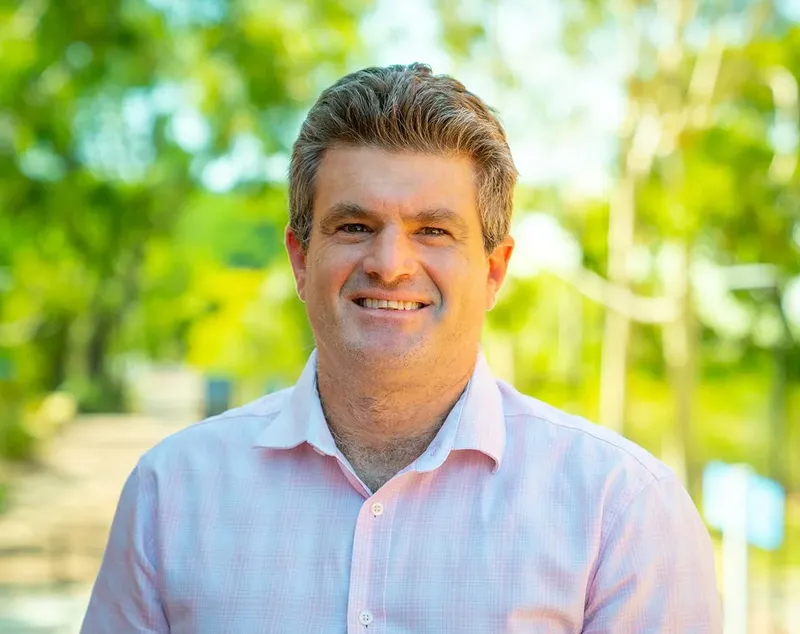
MAPS-certified clinician. Leading researcher in psychedelic therapy and ethnopharmacology.

A/Professor Petra Skeffington, Clinical Psychologist & Researcher

A/Prof Petra Skeffington

Clinical Psychologist & Researcher

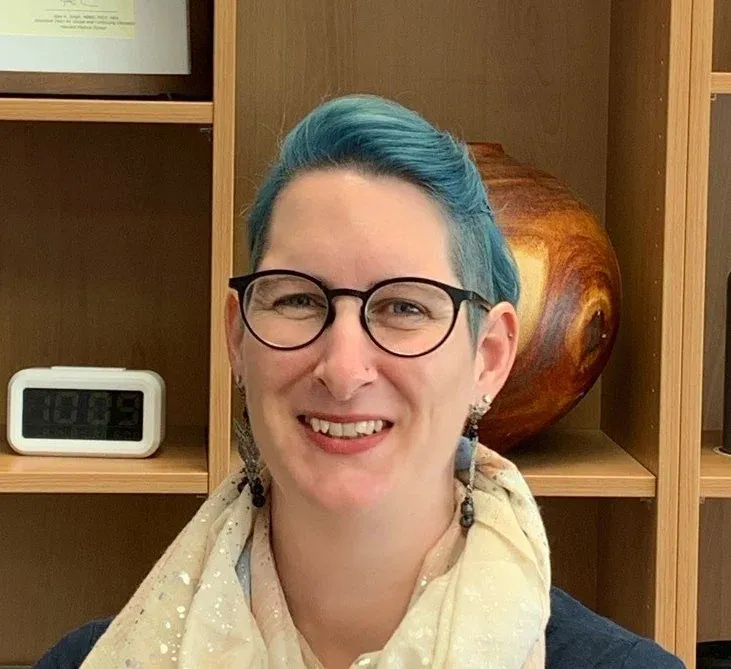
First MAPS-certified clinician in Australia. Extensive experience in both MDMA and Psilocybin assisted therapy.

Diego Pinzon, Psychedelic Educator

Diego Pinzon, MA

Psychedelic Educator

Extensive experience in psychedelic education in ustralia and overseas. Contributed to multiple psychedelic research initiatives. M.A. Transpersonal Psychology.

A community of practitioners

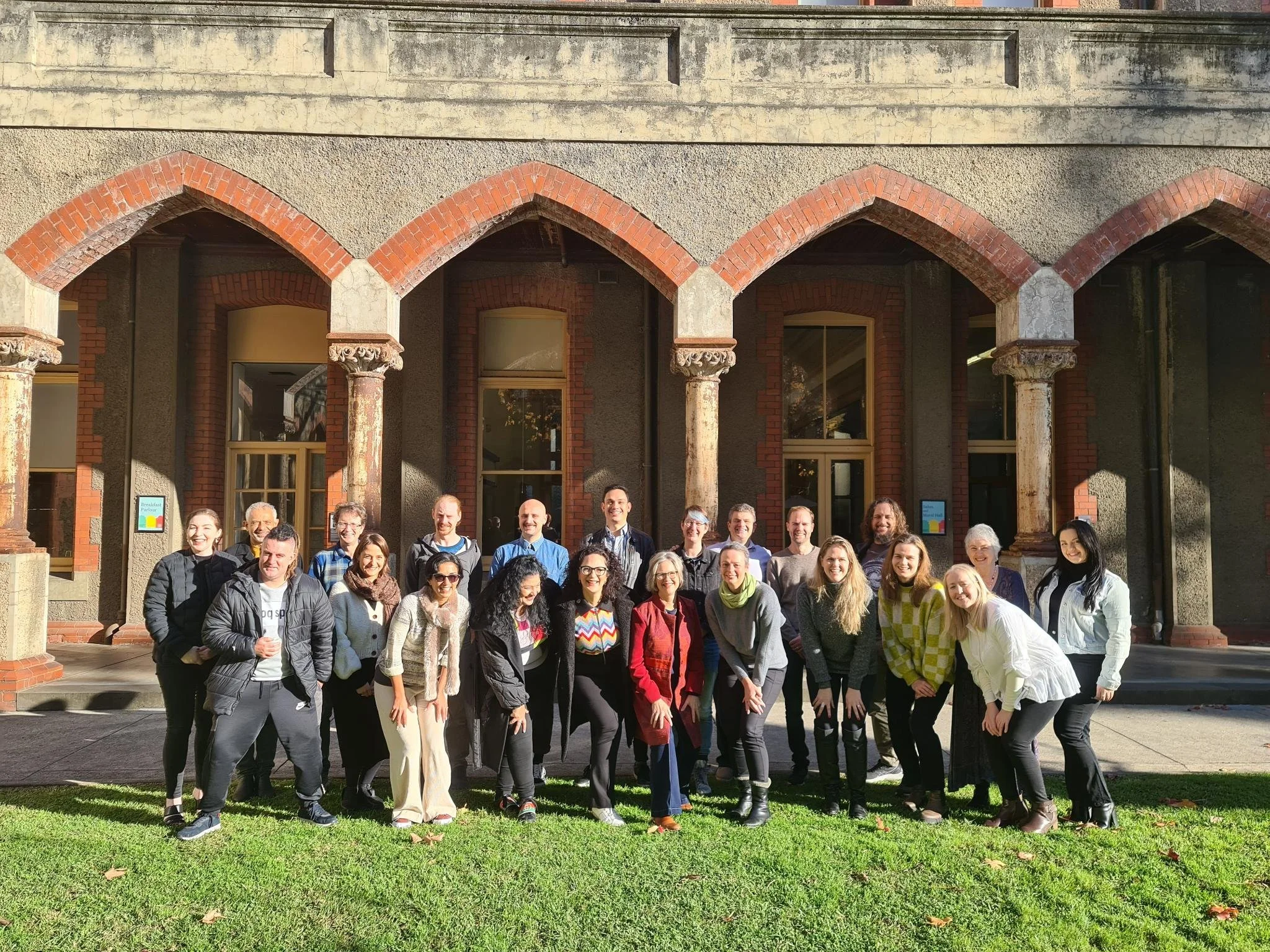
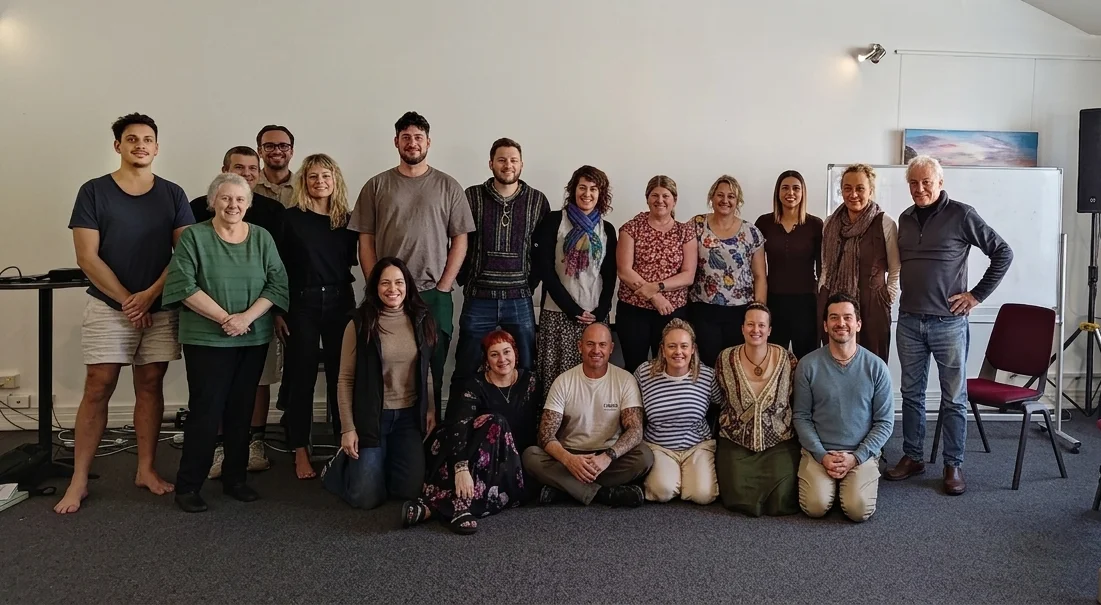
PIA held its first Melbourne workshop in 2024. The February 2027 intake will be our first full Essential Skills Program back in Melbourne — here's a look at recent PIA cohorts.

PIA training participants in Melbourne
PIA's 2024 Melbourne workshop

Who this program is for, and what you’ll be able to do after.

We built the Essential Skills Program for working clinicians who want to extend their existing practice into psychedelic-assisted therapy. Below is who we typically welcome and what graduates have gone on to do. If you’re not sure whether you fit, talk to us — we’d rather have a conversation than turn the wrong person away.

Where you are now

We typically welcome registered clinicians from these backgrounds:

  • Clinical psychologists
  • Counselling psychologists
  • Psychiatrists and psychiatry registrars
  • Mental health social workers
  • Mental health nurses
  • Medical doctors with relevant clinical experience
  • Psychotherapists with formal training

Most trainees come to us with several years of clinical practice already behind them. The program is designed to build on existing therapeutic skill — not to teach therapy itself. If you’re earlier in your training and want to know whether the program is right for you, talk to us first.

Where this can take you

Graduates of the Essential Skills Program have gone on to:

  • Join the therapy teams of Australian psychedelic clinical trials
  • Work as facilitators in TGA-authorised treatment programs
  • Apply for Authorised Prescriber status (psychiatrists)
  • Build private practice services that include psychedelic integration support
  • Train therapists at their own institutions and clinics
  • Contribute to the development of Australian psychedelic therapy standards

A note on transparency

We’re transparent about what the program does and does not qualify you for. The Essential Skills Program is foundational training in the clinical practice of psychedelic-assisted therapy. It is not a licensure pathway, and it does not certify you as a psychedelic therapist in any regulatory sense. Australia does not yet have a national accreditation framework for that. What it does do is prepare you — in skill and self-awareness — to do this work properly within the structures that currently exist.

Download the 2027 brochure

Dates, location, and investment.

Dates
February 8–12, 2027

Five days in-person, 9am–5pm daily. Online preparation modules via Psychedelics Today begin as soon as your place is confirmed. A Zoom integration session follows 2–4 weeks after the intensive.

Location
Abbotsford Convent — Melbourne, VIC

We're bringing the Essential Skills Program back to Melbourne, where PIA held its first workshop in 2024.

Investment
$4,295 AUD early bird until 1 Dec

Full price $4,695 AUD from 1 December 2026. Payment plans available — talk to us. We don’t want cost to be the reason a clinician can’t access this training.

What’s included

  • Five days of in-person training
  • 35 hours APS-approved CPD
  • Online preparation modules (via Psychedelics Today)
  • All training materials and resources
  • Certificate of completion
  • Post-training Zoom integration session
  • Ongoing access to the PIA alumni network

What’s not included

  • Travel to Melbourne
  • Accommodation
  • Meals outside of training hours
APS CPD Approved 2026-27, 35 Hours
Apply for the February intake

How to apply

Applications are open for our next Essential Skills Program in Melbourne, February 8–12, 2027. Follow these three steps to secure your place.

1

Submit Application

Fill out the Application form. We'll review your qualifications and experience to ensure the training is a good fit.

2

Secure Your Place

Pay a $200 AUD deposit to secure your place in the training program. The deposit is refundable less a $100 admin fee if you withdraw before enrolment is confirmed.

3

Complete Payment

Once you have been accepted into the program, pay the remainder of the cost to confirm your enrolment.

Cancellations 2+ months before the event: full refund minus $100 admin fee. 1–2 months before: 50% refund. Less than 1 month: no refund. Please read our full Cancellation Policy before enrolling. *Some training sessions may be conducted online.

Frequently Asked Questions

Will I be able to practice immediately after?

▼

This 5-day intensive prepares you to take your first clinical steps as a psychedelic-assisted therapist. Competence, however, requires ongoing clinical experience, supervision, and reflective practice beyond the training.

The training goal is to equip you with foundational clinical skills, protocols, and safety knowledge. You'll need clinical supervision and a commitment to continued learning as you integrate this modality into your practice.

What's included in the training cost?

▼
  • 5 online eLearning modules via Psychedelics Today (access granted upon confirmed enrolment)
  • 5 days of in-person intensive training in Melbourne
  • Post-training Zoom integration session with the facilitation team
  • 35 APS-approved CPD hours
  • All course materials and handouts
  • Certificate of completion
  • Access to PIA training community

Not included: Accommodation, meals, or travel.

How do I apply?

▼

Applications are open for our next Essential Skills Program in Melbourne, February 8–12, 2027. The process is:

  • Complete our online application form
  • Pay $200 AUD deposit to secure your place (refundable less $100 admin fee if you withdraw before enrolment is confirmed)
  • Once accepted, pay the remaining balance
  • Receive pre-training materials and access details

Applications close 2 weeks before the training begins. Limited to 20 participants to ensure quality interaction.

How do I become a psychedelic therapist in Australia?

▼

To work as a psychedelic-assisted therapist in Australia, you need to be a registered mental health professional (psychologist, psychiatrist, mental health nurse, or equivalent) with an existing clinical practice. From there, the pathway involves:

  • Foundational knowledge — Complete an eLearning course covering psychedelic pharmacology, research evidence, and clinical protocols (e.g., PIA’s Foundational Knowledge online course)
  • Clinical skills training — Attend an in-person intensive training program covering preparation, dosing session management, integration, and safety (e.g., PIA’s 5-day Essential Skills Program in Melbourne)
  • Supervised practice — Work under clinical supervision alongside an experienced co-therapist to build competence
  • Ongoing development — Engage in reflective practice, peer consultation, and continuing education

Since the TGA rescheduled MDMA and psilocybin as Schedule 8 medicines in July 2023, psychiatrists can prescribe these substances through the Authorised Prescriber Scheme. Psychologists and other therapists work alongside prescribing psychiatrists to deliver the therapeutic component of treatment.

How much does psychedelic therapy training cost in Australia?

▼

Training costs vary significantly between providers in Australia. PIA’s Essential Skills Program is priced at $4,295 AUD early bird until 1 December 2026 (full price $4,695 AUD from 1 December 2026) for a 5-day intensive plus online eLearning modules, including 35 APS-approved CPD hours, all course materials, and a certificate of completion. Payment plans are available — contact us if cost is a barrier.

Other programs in Australia range from $7,000 to $9,000+. When comparing costs, consider:

  • Total program duration — PIA’s 5-day format minimises time away from your clinical practice
  • What’s included — Some programs charge separately for online and in-person components
  • CPD recognition — Ensure the program offers APS-approved or equivalent CPD hours
  • Trainer experience — Look for trainers with direct clinical trial experience, not just academic knowledge

PIA’s Foundational Knowledge online course ($400 AUD) can be completed separately as a standalone introduction to psychedelic pharmacology, history, and clinical frameworks.

How long does psychedelic therapy training take?

▼

PIA’s Essential Skills Program can be completed in approximately 6 weeks total:

  • Upon enrolment — Online eLearning modules (self-paced, via Psychedelics Today platform)
  • 5 days — In-person intensive in Melbourne (9am–5pm daily)
  • 2–4 weeks after — Zoom integration session with the facilitation team

This is significantly shorter than other programs in Australia, which can take 14 weeks or longer. PIA’s intensive format is designed for working clinicians who cannot take extended time away from their practice. The concentrated structure also mirrors the immersive nature of psychedelic-assisted therapy itself.

That said, becoming a skilled psychedelic-assisted therapist is a lifelong endeavour. The landscape is ever-changing — new research emerges, regulatory frameworks evolve, and every client brings a unique experience. PIA encourages all graduates to engage in ongoing self-reflection and personal development, because the inner work is just as essential as the theoretical and clinical work — self-awareness, ethical integrity, and personal groundedness are what ultimately protect clients and sustain practitioners in this field. The Essential Skills Program gives you a strong foundation, but growth as a practitioner continues well beyond any formal training.

What happens after I complete the training?

▼

Completing the Essential Skills Program is the beginning of your journey as a psychedelic-assisted therapist, not the end. After training, PIA supports your development through:

  • Post-training Zoom integration session — A structured group session 2–4 weeks after the intensive to consolidate learning and address early questions
  • Supervision pathways — Guidance on finding and working with experienced supervisors in psychedelic-assisted therapy
  • PIA training community — Access to a network of fellow graduates and PIA trainers for peer support and consultation
  • Ongoing education — Advanced seminars, case consultation groups, and continuing education opportunities through PIA
  • Co-therapy opportunities — Pathways to work alongside experienced practitioners as you build clinical competence

We recommend that all graduates work under clinical supervision and alongside an experienced co-therapist when they begin integrating psychedelic-assisted therapy into their practice.

Do I need a psychology degree to do psychedelic therapy training?

▼

You don’t specifically need a psychology degree. What we look for is therapy experience or professional practice in a health-related field. Our participants come from a wide range of backgrounds, including:

  • Clinical psychologists and registered psychologists
  • Psychiatrists and psychiatry registrars
  • Psychotherapists and counsellors
  • Mental health nurses and general practitioners
  • Clinical social workers
  • Bodyworkers, somatic therapists, and breathwork facilitators
  • Midwives, death doulas, and end-of-life care practitioners
  • Other health and allied health professionals with therapeutic experience

Psychedelic-assisted therapy draws on a broad range of skills — not only clinical assessment and psychological formulation, but also somatic awareness, relational presence, and the ability to hold space in non-ordinary states. Practitioners from diverse therapeutic backgrounds bring valuable perspectives to this work. What matters most is that you have a solid foundation in working with people in a therapeutic or caring capacity, and a commitment to ethical, reflective practice.

Applications are assessed individually, so if you’re unsure about your eligibility, contact us to discuss your background.

What is MAPS certification and does this training provide it?

▼

MAPS (Multidisciplinary Association for Psychedelic Studies) developed the clinical protocols used in landmark MDMA-assisted therapy trials. “MAPS-certified” or “MAPS-trained” refers to clinicians who completed MAPS’ own therapist training program for these trials.

PIA’s training team includes MAPS-certified clinicians — A/Prof Petra Skeffington and Dr Stephen Bright were among the first MAPS-certified practitioners in Australia. Together, they were the first to administer MDMA in a clinical trial in Australia and the first to administer psilocybin in a clinical trial in Western Australia. While our Essential Skills Program is not a MAPS certification program (MAPS trains therapists specifically for their own clinical trials), you’ll be learning directly from MAPS-trained clinicians who bring that methodology and clinical rigour to PIA’s curriculum.

Our training covers both MDMA and psilocybin-assisted therapy protocols, drawing on the evidence base from MAPS trials, the COMPASS COMP360 psilocybin program, and Imperial College London’s research.

The next cohort is in Melbourne — February 8–12, 2027.

Applications are open. Cohorts are deliberately small — we recommend applying early. If you're not sure whether the program is right for you, send us a message first.